A Picnic That Packs Itself Around the Bread
Plan a picnic around bread with a few sturdy, well-matched accompaniments, so the meal travels neatly, shares easily, and needs little last-minute work.
What bread should you pack for a picnic? Start with the conditions at the table: how long the food will travel, whether you can slice it there, and how many hands will reach for it. A picnic around bread works best when the loaf sets the meal’s texture and pace, while a small number of accompaniments supply moisture, salt, freshness, and something sweet.
That is less a menu than a useful way to make decisions. A crusty loaf asks for spreads and soft fillings. Flatbread can wrap or scoop. Tender rolls are easy to pass around but benefit from fillings that will not spill through them. Choose the bread first, then stop adding things once every part of the meal has a clear job.
Choose bread for the trip, not the photograph
For a walk or a long ride, take bread that can tolerate being carried: a country loaf with a substantial crust, sturdy rolls, pita, or a firm focaccia. These are less likely to arrive as crumbs than a delicate baguette or very soft sandwich bread squeezed under a water bottle. If you want a crisp crust, keep the loaf whole and slice it at the picnic. A pre-cut loaf is more convenient, but its exposed interior can dry out on the way.
For a short trip to a nearby park, fresh baguette, soft rolls, or a tender flatbread can be a pleasure rather than a packing liability. Bring a small serrated knife if slicing is part of the plan, and use a stable board or the inside of a clean container as a surface. A whole loaf also makes a practical serving piece: people can tear or cut what they want, rather than being handed a sandwich whose proportions were decided at home.
If the meal needs to be eaten while walking, choose bread that can become a complete portion before you leave. A filled roll or folded flatbread is easier to manage than loose slices and a container of olives. If everyone will sit down, open bread and shared accompaniments make more sense. Let the actual meal setting decide whether the bread is a handheld vessel or the center of a shared spread.
Match the accompaniments to the bread
Think in contrasts rather than in a long list of picnic foods. Bread is usually starchy and mild; its companions can bring softness, acidity, crunch, richness, or fruit. Three or four well-chosen things often make a more coherent meal than a collection of unrelated snacks.
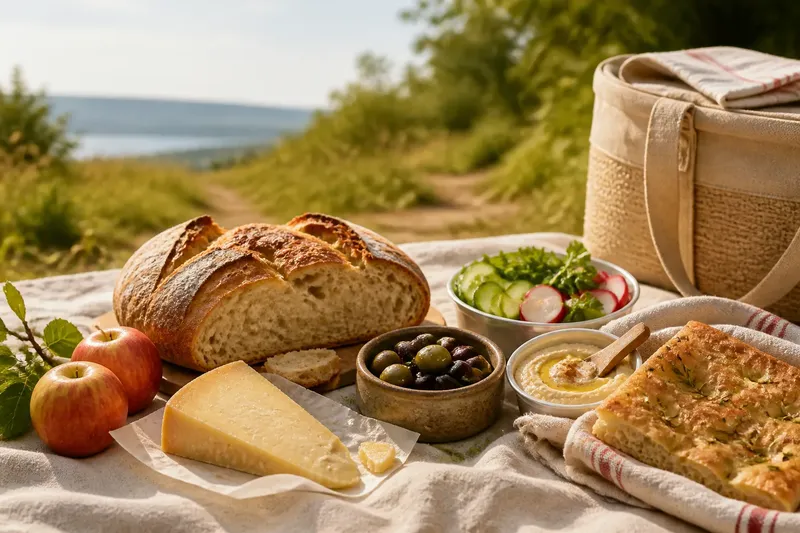
- For a crusty loaf: pack a firm cheese, a jar of olives, and sliced fruit such as apples or pears. The cheese softens the bread’s dry bite, while briny olives and fresh fruit keep the meal from feeling uniformly rich.
- For pita or flatbread: choose a thick spread such as hummus, a container of cucumber or radishes, and a handful of herbs. The bread can scoop the spread, and the vegetables add a cool, crisp counterpoint.
- For focaccia: bring ripe tomatoes, a piece of aged cheese, or roasted peppers packed without excess liquid. Focaccia already carries oil and salt, so a bright or savory topping is more useful than another rich spread.
- For soft rolls: choose fillings that stay in place, such as sliced cheese with mustard, or a thick bean spread with crisp lettuce. Avoid a wet filling that will soak through the crumb before lunch.
Say you are packing a crusty loaf for a picnic bench near a walking trail. Add a wedge of firm cheese, a small sealed container of olives, and two apples. The bread can be torn or sliced, the cheese gives it substance, and the fruit provides a clean finish; nothing needs assembly beyond opening the containers.
Bring a spread in a leak-resistant container and a spoon or small knife for serving. Keep it separate from the bread until mealtime, especially if it is moist. That simple separation protects both the crust and the contents of the bag.
Pick the right plan for the way you will eat
If you will be walking or standing, make portions before leaving. Fill rolls or fold flatbreads around fillings that are not slippery, then wrap each one in paper. Add one easy-to-eat fruit. A shared loaf and several open containers are awkward when nobody has a free hand.
If you have a blanket or picnic table, take a whole loaf or stack of flatbreads and arrange the accompaniments in their containers. This suits a group with different appetites and makes sharing feel natural. Pack a small knife and serving spoon, but do not bring a tool for every item.
If the outing is short and spontaneous, buy one good loaf on the way and pair it with prepared, ready-to-eat foods: cheese, washed fruit, nuts, or olives. Choose items that require no chopping and can be eaten without a plate. The point is to reduce preparation, not to recreate a kitchen beside the path.
If children or mixed appetites are part of the group, keep flavors familiar and offer components separately. Plain bread, cheese, fruit, and a mild spread let each person make a small combination. A heavily dressed sandwich gives everyone the same decision, whether they wanted it or not.
Keep the packing simple and the textures intact
Use a cloth bag or paper for a whole loaf, and a rigid container for foods that bruise or leak. Avoid sealing warm bread in plastic, where trapped steam can soften the crust. Pack spreads and moist toppings in closed containers, with the bread in its own wrap. Put fragile fruit near the top rather than beneath a bottle or a stack of plates.
Bring only the serving items the menu calls for: perhaps a small cutting board, a serrated knife, a spoon, napkins, and a cloth for the picnic surface. If the bread is pre-sliced and the accompaniments are ready to eat, the knife and board may be unnecessary. Fewer objects make it easier to notice what the meal actually needs.
For perishable foods, use an insulated bag and cold packs when appropriate, and follow the package directions and local food-safety guidance. Keep food out of direct sun and return leftovers to cold storage promptly. If the day or the ingredients make safe storage uncertain, choose shelf-stable accompaniments instead.
What should you bring for common picnic plans?
Which bread works best for a long walk?
Choose a sturdy roll, pita, or firm loaf that can travel without being crushed. For a meal eaten on the move, make individual portions at home and wrap them separately.
What goes with bread when you do not have plates?
Pick food that can be held, spread, or eaten directly from a small container: firm cheese, apples, nuts, or olives. A thick spread works better than a runny dip when there is no level surface.
How can you keep bread from going soggy?
Carry moist spreads and toppings separately, then add them when you are ready to eat. For pre-filled rolls, choose compact fillings and wrap the portions so they do not shift around in the bag.
How much variety does a bread picnic need?
Choose a few accompaniments with different textures or flavors rather than several versions of the same thing. One rich item, one crisp or fresh item, and one salty or tangy item make a useful starting point.
Leave one part of the meal undecided
A picnic planned around bread does not have to arrive as a finished arrangement. Keep one accompaniment flexible: add market tomatoes if they look good, swap in a seasonal fruit, or leave the spread at home if the bread and cheese are enough. The useful search phrase, picnic around bread, describes an organizing principle, not a fixed menu.
Before you pack, ask whether each item can be carried, served, and eaten with the tools you have brought. If the answer is yes, the meal is ready. If one container needs its own complicated workaround, it may be the item that stays in the fridge.