Chopped, Crushed or Sliced Garlic? Choose by the Texture You Want
Chopped, crushed or sliced garlic changes how flavor spreads through a dish. Choose the cut that suits your sauce, sauté, roast or finished plate.
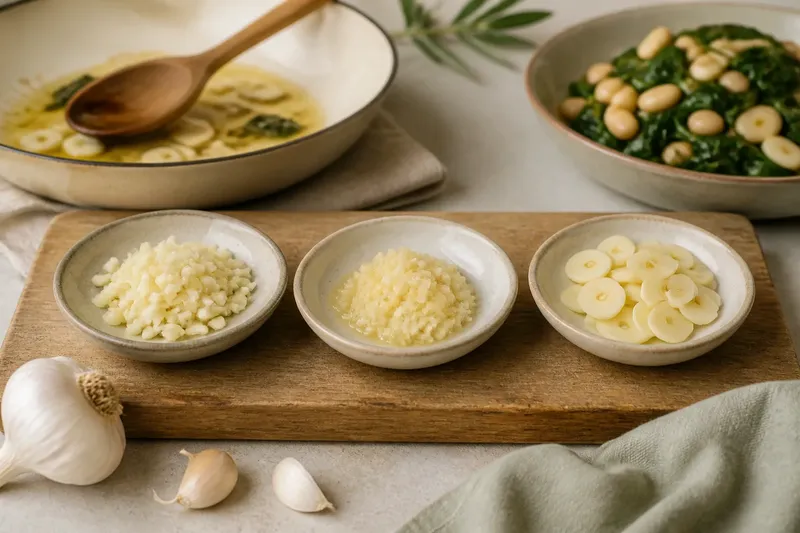
Chopped, crushed or sliced garlic: which cut belongs in the pan? The useful distinction is not a contest over strength. It is how much garlic you want in each bite, and whether its flavor should spread evenly or arrive in distinct pieces.
A clove contains the same basic ingredient in every form, but cutting changes its surface and shape. Small pieces mix readily into a dish; larger slices stay easier to see and pick up. Crushing turns a clove into a paste that can cling to other ingredients. Cooking then changes the character further, so the best cut depends on both the dish and the moment you add it.
Chopped garlic leaves small, distinct pieces
Chopping breaks a clove into pieces without turning it to pulp. A coarse chop leaves noticeable bits; a fine chop disperses more readily and gives a more even distribution. Either way, the garlic remains identifiable, unlike a paste stirred through a sauce.
Choose chopped garlic when you want it to share the dish without disappearing entirely. It suits sautés, soups, bean dishes, and many sauces. In a pan of vegetables, for instance, a fine chop can cling among the pieces, while a rougher cut gives an occasional concentrated bite. The result depends on the size of the pieces and how thoroughly the dish is stirred.
For a more even result, make the pieces roughly similar in size. A mix of tiny fragments and large chunks can cook unevenly: the small pieces may darken while the larger ones are still raw at the center. There is no need to make the pile look machined; just avoid leaving a stray wedge among the mince.
Crushed garlic becomes a paste that spreads
Crushing ruptures the clove and presses its interior outward. A garlic press produces a moist, fine mass; the flat side of a chef’s knife can also flatten a clove, which can then be chopped into a rough paste. That paste disperses quickly into oil, dressing, marinades, and soft mixtures such as mashed potatoes.
The advantage is coverage. Instead of finding a piece of garlic here and there, you get its flavor distributed through more of the dish. The trade-off is that crushed garlic is harder to remove and can taste sharp when it is left raw. It also cooks quickly in a hot pan, so adding it at the same time as a slower-cooking ingredient may give it too much exposure to heat.
Use a press when you want a fine texture and do not mind the tool’s small chambers needing a rinse. Use a knife when you want to decide how coarse the paste should be or would rather avoid a separate gadget. A press can trap a little garlic in its workings; scrape both sides before deciding the clove has vanished into the kitchen equipment.
Sliced garlic keeps its shape and presence
Slices retain the outline of the clove. Thin slices soften and become easy to eat; thicker ones stay more noticeable. They can be stirred into a pan, laid over vegetables before roasting, or cooked gently in oil to flavor it. Because each piece is larger than a fine chop, slices are easier to spot and lift out if you want the aroma without eating every piece.
Sliced garlic works well when a dish benefits from visible pieces and a more gradual release of flavor. In oil, gentle cooking can make slices tender and mellow; rushed cooking can instead brown their edges before the center softens. For a pasta sauce, slices can remain in the finished bowl or be removed before the sauce is served. The cut gives you that choice without asking anyone to inspect a speck of mince.
Keep the slices reasonably even so they soften at a similar pace. Very thin pieces need attention, particularly in a hot pan. If the recipe calls for garlic to flavor oil, watch the color and smell: pale gold is a useful cue to move on, while dark brown garlic can taste bitter.
Match the cut to the texture you want
Think about the finished bite before you reach for a knife. The same dish can feel quite different depending on whether garlic is evenly blended, scattered in small pieces, or present as a recognizable slice.
- For an even flavor through a dressing: use crushed garlic or a very fine chop, then mix thoroughly.
- For small garlic pieces among vegetables or beans: choose a fine or medium chop.
- For visible, tender pieces: slice the clove and cook the pieces gently.
- For a dish where garlic should be easy to remove: use larger slices rather than paste.
- For a brief, hot sauté: add garlic late enough that it does not sit exposed to heat while other ingredients cook.
Imagine you are making a bowl of white beans with olive oil and greens. If you want garlic in every spoonful, crush a clove into the oil and stir it through. If you want occasional soft pieces, slice it and let the slices cook gently before adding the greens. If you want a little of both, chop it finely and distribute it through the beans. Each choice starts from the same clove; the texture decides how the flavor travels.
Heat changes the result as much as the cut
Cut size is only part of the decision. Raw garlic stays sharper than garlic cooked until soft, and browned garlic has a different, toastier character. A small cut exposes more of the clove to the surrounding oil or sauce, so it can spread through a dish quickly. A slice keeps more of its own shape, although its flavor still moves into the cooking liquid or fat.
In a pan, garlic is often added after onions or other ingredients have begun to soften. This gives it less time to brown before the rest of the dish is ready. In a soup or braise, garlic can be added earlier because moisture and longer cooking soften the pieces. In a cold sauce, the cut will remain more noticeable, so choose a size you are happy to eat as it is.
Do not use color alone as a command to keep cooking. Garlic can go from pale to bitter faster than a pan of onions can make its case. Lower the heat or add the next ingredient when the garlic smells aromatic and begins to color, adjusting for the method and recipe.
Which garlic cut works best for common dishes?
Should I chop or crush garlic for pasta sauce?
Use chopped garlic if you want small pieces to remain in the sauce, and crushed garlic if you want it to blend more evenly. For a sauce cooked briefly, add either form with care so it does not brown before the other ingredients are ready.
Is sliced garlic milder than chopped garlic?
Not automatically. Slices are larger and more distinct, while a chop spreads through the dish more readily; the final taste also depends on how long and how intensely each form is cooked.
Can I swap minced garlic for crushed garlic?
Usually, if the recipe allows the garlic to mix into the surrounding ingredients. Minced garlic may leave more small pieces, while a press-made paste disperses more smoothly, so the texture can differ even when the amount of garlic is similar.
When should garlic be added to a pan?
Add it when there is enough time for the cut you chose to soften and release aroma, but not so much that it darkens before the rest of the dish is ready. Fine or crushed garlic needs less time in a hot pan than larger slices.
Choose the cut before you start cooking
For chopped, crushed or sliced garlic, decide first whether you want small bits, a spreadable paste, or visible pieces. Then consider how much cooking time the garlic will get and whether you want to eat it or remove it before serving. Those two decisions settle most of the kitchen argument.
Keep a knife sharp enough to cut cleanly, and use a garlic press only when its fine texture suits the dish. If a recipe specifies a cut, follow it when texture matters; otherwise, choose the form that makes sense for the finished bite. The clove does not mind being chopped. The person eating it may notice.